
Steam & Combi Oven Control Systems: Relay-Based vs. SCR-Driven Temperature Control Protocols
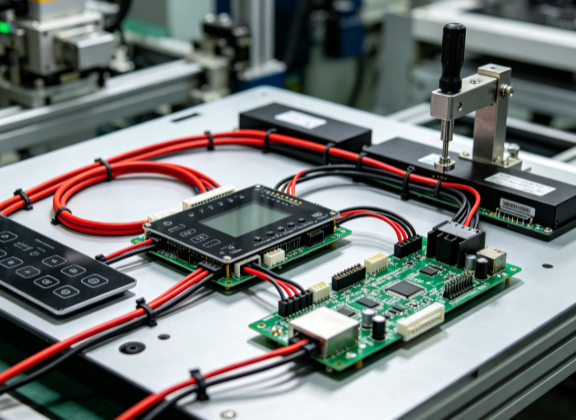
1. Introduction: The Heart of the Combi Oven
Let me start with something that's been on my mind for a while. When people talk about combi ovens – those versatile kitchen workhorses that can steam, bake, roast, and do everything in between – they talk about the cooking results. The even browning. The perfectly steamed vegetables. The crispy roast chicken.
But here's the thing: none of that happens without the control system. And the temperature control protocol – specifically, whether you're using relay-based or SCR-driven control – is what determines whether that oven delivers consistent results shift after shift, or whether it leaves your kitchen staff frustrated and your food inconsistent.
I've been working in commercial kitchen equipment sourcing and manufacturing for about eleven years now, and if there's one thing I've learned, it's that choosing between relay-based and SCR-driven temperature control protocols for steam and combi ovens is one of the most consequential decisions you can make. It affects temperature stability, equipment longevity, energy consumption, and ultimately, the quality of the food coming out of the oven.
The global market for oven control panels was valued at approximately $13.75 billion in 2025 and is projected to reach $24.3 billion by 2032. Combi ovens represent a significant portion of this market, with control systems and mainboards accounting for about 25% of the total cost of a commercial combi oven.
Here's the question that comes up constantly in sourcing reviews and engineering discussions: relay-based or SCR-driven – which temperature control protocol should you be specifying?
The answer isn't as simple as "SCR is better." Both approaches have their place. Both offer distinct advantages. And understanding the differences – particularly in how they handle temperature cycling, precision, and component wear – is what separates a well-specified oven from one that creates problems for years to come.
2. Relay-Based Temperature Control: The Traditional Workhorse
Let's start with the traditional approach, because it's still the most common – and for good reason.
What It Is
Relay-based temperature control uses electromechanical relays or contactors to switch power to the heating elements on and off. When the oven temperature drops below the setpoint, the relay closes, power flows to the elements, and the oven heats up. When the temperature reaches the setpoint, the relay opens, power stops, and the oven cools down.
Electromechanical relays use magnetic devices to actuate power switching. When power is applied to the relay field coil, contact closure is created through the movement of the relay's common contact.
There are also solid-state relays (SSRs) , which have no moving parts and use semiconductor switching. SSRs are more durable than electromechanical relays and can operate at much faster cycle times. But in the context of this discussion, both electromechanical relays and SSRs operate on the same fundamental principle: on/off switching.
The On-Off Cycle
Here's how relay-based control actually works in practice. The power regulating devices control the time that each element is powered ON relative to the time that each element is powered OFF.
A typical relay-controlled oven cycles the heating elements ON and OFF at intervals ranging from approximately 3 to 360 seconds. Good performance is often realized with 30-second to 180-second cycles.
During the ON portion of the cycle, the element is at full power. During the OFF portion, it's at zero power. The temperature is averaged over the cycle – but the temperature itself fluctuates.
The Wear Problem
Here's where relay-based control starts to show its limitations. Every time a relay opens or closes, the contacts experience wear. Arcing across the metal contacts as they come together causes material transfer, which will eventually result in the contacts welding together.
The projected life of a high-quality mechanical relay is around 100,000 cycles at full rated load – and up to 1,000,000 cycles at one-third rated load.
But here's the thing that a lot of people don't realize: a commercial combi oven running 16 hours a day, cycling every 30-60 seconds, can exceed 100,000 cycles in a matter of months. That's why relay failure is one of the most common service issues in commercial ovens.
A common solid-state relay might have a lifespan of about 50,000 switching cycles – roughly 1-2 years of typical use, depending on frequency and duration.
Thermal Cycling and Heater Life
There's another problem that's less obvious but equally significant. Using contactors or relays to control heaters decreases the life of the heater compared to other switching technologies such as SCRs, due to thermal cycling.
Every time the heating element goes from full power to zero power and back again, it experiences thermal shock. The expansion and contraction stress the element material, eventually leading to failure. In a relay-controlled system, this happens hundreds of times a day.
3. SCR-Driven Temperature Control: The Precision Alternative
Now let's talk about the alternative – and why it's increasingly becoming the preferred choice for high-end combi ovens.
What It Is
An SCR (Silicon Controlled Rectifier) – also known as a thyristor power controller – is a solid-state switching device that can provide fast, infinitely variable proportional control of electric power.
Unlike a mechanical relay or contactor, an SCR has no mechanical parts to wear out. The SCR will not arc or be affected by dirty contacts.
How It Controls Power
SCRs regulate electrical output by switching AC voltage on and off at high speeds. There are two primary control methods:
Phase Angle Control varies the conduction angle of the AC sine wave to provide continuous, smooth power adjustment. By varying the firing angle from 0° to 180°, the controller smoothly adjusts the effective voltage and thus the power delivered to the load from 0% to 100%. This provides resolution better than 0.1%.
Burst Fire Control (Zero-Cross) switches full AC cycles on and off in packets. This minimizes Radio Frequency Interference and is best suited for standard resistive heating elements.
The key difference from relay-based control is that SCRs don't just turn power on and off – they modulate it. Instead of 100% power or 0% power, an SCR can deliver 45% power, or 72% power, or any value in between.
The Precision Advantage
This is where SCRs really shine. With phase angle control, the SCR proportions power every cycle, providing very fine resolution.
With a PID closed-loop control algorithm, SCR-driven systems can achieve temperature control accuracy of ±0.5% to ±1% – far tighter than the ±2-5°C typical of relay-based systems.
An SCR power controller used for regulating oven temperature compares actual values against setpoint values and orchestrates precise adjustments to the heating output. If products emerge colder than desired, the SCR power controller intervenes and adjusts the oven temperature.
The Efficiency Advantage
SCRs also deliver significant energy savings. CD Automation reports that optimized SCR control reduces electrical consumption, with smooth, stable power reducing heater fatigue and extending heater life.
Because SCRs match power output as needed, they avoid energy waste caused by excessive heating and the overshoot that's common with on-off control.
4. Control Protocols: How Each Method Actually Works
Let me break down the actual control protocols, because this is where the technical differences really matter.
Relay-Based Protocol: On-Off (Bang-Bang) Control
In a relay-based system, the temperature controller compares the actual temperature against the setpoint. If the actual temperature is below the setpoint minus the hysteresis band, the controller closes the relay and applies full power. If the actual temperature is above the setpoint plus the hysteresis band, the controller opens the relay and applies zero power.
The result is a temperature that oscillates around the setpoint. The amplitude of the oscillation depends on the hysteresis band and the thermal mass of the oven. With a wide hysteresis band, the temperature swings are larger but the relay cycles less frequently. With a narrow hysteresis band, the temperature is more stable but the relay cycles more frequently – and wears out faster.
Some relay-controlled ovens use time proportioning, where the controller varies the ratio of ON time to OFF time within a fixed cycle period. This provides better control than simple bang-bang, but it still results in more cycling and wear.
SCR-Driven Protocol: Proportional Control
In an SCR-driven system, the temperature controller outputs a continuous analog signal – typically 4-20mA, 0-5VDC, or 0-10VDC – to the SCR power controller.
The SCR translates this signal into proportional power output. Instead of turning the heating elements fully on or fully off, the SCR delivers exactly the amount of power needed to maintain the setpoint.
With phase angle control, the SCR adjusts the conduction angle of each half-cycle of the AC waveform, providing stepless, smooth power adjustment. The result is a temperature that stays essentially constant – no oscillation, no overshoot, no undershoot.
A Note on Hybrid Approaches
Some modern combi ovens use hybrid approaches that combine the best of both worlds. For example, some ovens use relay-based control for high-power functions like preheating and SCR control for precise temperature maintenance.
Other ovens use SSRs with faster cycle times than electromechanical relays, approaching the performance of SCRs while maintaining the simplicity of on-off control.
5. Head-to-Head: A Complete Technical Comparison
Let me give you a practical side-by-side comparison.
Factor | Relay-Based Control | SCR-Driven Control |
Control method | On-off switching | Proportional (phase angle or burst fire) |
Temperature precision | ±2-5°C typical | ±0.5% to ±1% |
Power delivery | 100% or 0% | 0-100% continuously variable |
Switching speed | Seconds (3-360 sec cycles) | Milliseconds (per half-cycle) |
Mechanical wear | Significant – contacts wear and arc | None – no moving parts |
Typical relay/SCR life | ~100,000 cycles at full load | No mechanical wear limit |
Heater element life | Reduced by thermal cycling | Extended by smooth power delivery |
Energy efficiency | Moderate – overshoot/undershoot waste | High – power matched to demand |
RFI/EMI generation | Moderate | Low (burst fire) to moderate (phase angle) |
Upfront cost | Lower | Higher |
Lifetime cost | Higher (replacements, downtime) | Lower (reduced maintenance) |
Typical applications | Entry-level to mid-range combi ovens | High-end commercial combi ovens |
Sources: Watlow, CD Automation, industry data
Here's what this table tells you in plain English:
Relay-based control is like driving a car by flooring the accelerator and then slamming on the brakes – you get where you're going, but it's not smooth, and it wears out the components.
SCR-driven control is like using cruise control – you set the speed and the system makes continuous, smooth adjustments to maintain it.
6. The Cost Equation: Upfront vs. Lifetime
This is where the decision gets interesting – and where a lot of people make the wrong call.
Upfront Cost
Relay-based control systems have lower upfront costs. Electromechanical relays and SSRs are less expensive than SCR power controllers. The control boards are simpler and less expensive to manufacture.
SCR-driven systems have higher upfront costs. The SCR power controller itself is more expensive, and the control board needs to support analog output and more sophisticated control algorithms.
Lifetime Cost
This is where SCRs start to look much more attractive.
CD Automation reports that SCR power controllers can reduce downtime by up to 95% and lower lifetime costs by as much as 90% compared with mechanical contactors.
The savings come from several sources:
Fewer relay replacements – no contacts to wear out
Longer heater element life – less thermal shock
Lower energy consumption – power matched to demand
Less downtime – fewer service calls
More consistent product quality – fewer rejects
One supplier notes that while SSRs cost less upfront, the long-term math favors SCR: fewer component replacements, lower downtime, better process yield, and tighter energy use.
The Replacement Reality
Consider this: a commercial combi oven operating 16 hours a day, 6 days a week, with a 60-second cycle time, will cycle its heating elements 57,600 times per year. A mechanical relay rated for 100,000 cycles at full load would need replacement in less than two years – and that's assuming ideal conditions.
Each replacement means downtime, labor cost, and parts cost. Multiply that across a fleet of ovens, and the numbers add up quickly.
7. Real-World Impact: What the Data Shows
Let me share some specific data that illustrates the real-world differences between these two approaches.
Temperature Control Precision
Industrial heating applications using SCRs with PID closed-loop algorithms can achieve temperature control accuracy of ±0.5% to ±1% .
SCR power controllers using phase angle control can provide resolution better than 0.1%. In practical terms, this means a combi oven set to 180°C might hold temperature within ±0.9°C to ±1.8°C.
Relay-based systems, by contrast, typically deliver temperature control within ±2-5°C . In a combi oven set to 180°C, that's a swing from 175°C to 185°C – a 10°C range that can significantly affect cooking results.
Component Lifespan
Mechanical relays: The projected life of a high-quality mechanical relay is around 100,000 cycles at full rated load.
Solid-state relays: A common SSR might have a lifespan of about 50,000 switching cycles – roughly 1-2 years of typical use.
SCR power controllers: No mechanical wear limit. SCRs are designed for continuous industrial duty.
Energy Efficiency
SCRs optimize power delivery to match demand, avoiding energy waste caused by excessive heating.
CD Automation reports that optimized SCR control reduces electrical consumption, with smooth, stable power reducing heater fatigue and extending heater life.
The Combi Oven Market Context
The global combi oven market is substantial and growing. Control systems and mainboards account for about 25% of the total cost of a commercial combi oven.
Many units on the market today retain usable chambers and frames but operate with aging controllers – including obsolete communication hardware and inefficient insulation. This creates opportunities for control system upgrades, including the transition from relay-based to SCR-driven control.
Upgrade packages covering digital controls, temperature calibration, and steam-system refurbishment are becoming increasingly common.
8. Practical Considerations for Equipment Manufacturers
Alright, let's get practical. You're specifying control systems for a combi oven line. Here's how to approach the decision.
Application Requirements
If precision matters – and in a combi oven, it always does – SCR-driven control offers clear advantages. The tighter temperature control translates directly to better, more consistent cooking results.
If the oven will see heavy use – commercial kitchens, high-volume production – SCR-driven control reduces maintenance costs and downtime.
If energy efficiency is a priority – and for most commercial operations, it is – SCR-driven control delivers meaningful savings.
If upfront cost is the primary concern – relay-based control is less expensive initially, though the lifetime cost calculation may favor SCR.
Product Positioning
Entry-level ovens can use relay-based control effectively. The lower cost helps hit price points, and the performance is adequate for many applications.
Mid-range ovens might use SSRs with faster cycle times, bridging the gap between electromechanical relays and full SCR control.
High-end ovens should use SCR-driven control. The precision, reliability, and energy efficiency justify the premium.
Service and Support Considerations
If you're manufacturing ovens that will be serviced in the field, consider the service implications:
Relay-based systems are simpler to diagnose and repair – but they fail more often
SCR-driven systems are more complex but fail less frequently
Replacement part costs: relays are cheap; SCR power controllers are expensive but last much longer
The Upgrade Opportunity
One of the most interesting developments in the market is the retrofit and upgrade opportunity. Many existing combi ovens have aging relay-based control systems. Suppliers can capture this gap through certified upgrade packages covering digital controls and temperature calibration.
If you're a manufacturer, offering SCR-driven control upgrades for existing ovens could be a significant revenue opportunity.
9. Frequently Asked Questions
Q: What's the difference between an SCR and an SSR?
An SSR (Solid State Relay) is an electronic switching device with on/off functionality – it doesn't adjust voltage or current. An SCR (Silicon Controlled Rectifier) adjusts output voltage by controlling the conduction angle within each power cycle, enabling proportional power regulation.
Q: Which is better for a combi oven – relay-based or SCR-driven control?
It depends on your priorities. SCR-driven control offers better temperature precision, longer component life, and lower lifetime costs – but higher upfront costs. Relay-based control is less expensive initially but has higher lifetime costs.
Q: How much more accurate is SCR control?
SCR-driven systems with PID control can achieve ±0.5% to ±1% temperature accuracy. Relay-based systems typically achieve ±2-5°C.
Q: Do SCRs really save energy?
Yes. By matching power output to demand, SCRs avoid the energy waste caused by the overshoot and undershoot that's common with on-off control.
Q: How long does a mechanical relay last in a combi oven?
A high-quality mechanical relay is rated for about 100,000 cycles at full load. In a busy commercial kitchen, that might be 1-2 years of operation.
Q: Are SCRs more expensive to repair?
SCR power controllers are more expensive components than relays, but they fail much less frequently. The total cost of ownership is typically lower with SCRs.
Q: Can I upgrade a relay-controlled oven to SCR control?
In some cases, yes. Control system upgrades are becoming increasingly common, with certified upgrade packages covering digital controls and temperature calibration.
10. Final Thoughts
Let me leave you with this.
The choice between relay-based and SCR-driven temperature control protocols for steam and combi ovens isn't just a technical decision – it's a strategic one that affects your product's performance, reliability, and total cost of ownership.
Relay-based control is the traditional approach. It's simple, it's proven, and it's cost-effective upfront. But it comes with real limitations: temperature swings that affect cooking quality, contact wear that leads to frequent failures, and thermal cycling that shortens heater element life.
SCR-driven control is the modern alternative. It delivers precise, proportional power control that maintains tight temperature stability. It has no moving parts to wear out. It extends heater element life. It saves energy. And while it costs more upfront, it typically saves money over the lifetime of the oven.
The trend in the industry is clear. High-end combi ovens are increasingly using SCR-driven control. The precision, reliability, and efficiency advantages are too significant to ignore.
But here's the thing – and I want to be really clear about this – relay-based control still has its place. For entry-level ovens, for applications where precision isn't critical, and for operations where upfront cost is the primary constraint, relay-based control can be the right choice.
The key is understanding the trade-offs and making an intentional decision based on your specific requirements.
If you're specifying control systems for a combi oven line right now, here's my advice:
Think about the end user. What are their precision requirements? How many hours a day will the oven run? What's their tolerance for downtime?
Calculate the total cost. Don't just look at the upfront cost – factor in replacement parts, labor, downtime, and energy consumption over the expected lifetime of the oven.
Consider your market position. Are you competing on price or performance? Your control system choice should align with your overall product strategy.
And if you're still unsure – well, that's why hybrid approaches exist. You can use relay-based control for high-power functions like preheating and SCR control for precise temperature maintenance. The key is knowing the options and choosing accordingly.